
 English
 Español
 Pусский
 Deutsch
 한국어
한국어 हिन्दी
 Indonesia
 Melayu
 Tiếng Việt
マイクロチャネル光化学反応器
A microchannel photochemical reactor is a compact reaction system that combines microfluidic engineering with photochemistry to improve the efficiency, safety, and controllability of light-driven chemical transformations. It is designed with small-diameter channels, typically ranging from micrometers to a few millimeters, through which reactants flow continuously while being exposed to a light source. Because of the small channel dimensions, the reactor offers a very high surface-area-to-volume ratio, which greatly enhances heat transfer, mass transfer, and light penetration. These characteristics make it especially suitable for reactions that require precise control of irradiation and mixing.In a traditional batch photochemical reactor, light often penetrates unevenly through the reaction medium, and scaling up can be difficult because the reaction volume increases while the efficiency of irradiation decreases. By contrast, a microchannel photochemical reactor addresses these limitations through continuous flow operation. The reactant mixture moves through narrow channels, allowing all portions of the fluid to receive more uniform exposure to photons. This uniformity can reduce side reactions, improve product selectivity, and increase overall yield. Since the residence time can be accurately controlled by adjusting the flow rate, the reactor provides a high degree of flexibility for process optimization.Another major advantage of this reactor type is safety. Many photochemical reactions involve energetic intermediates, reactive radicals, or hazardous reagents. In a microchannel system, only a small amount of material is present in the reactor at any time, which lowers the risk associated with exothermic reactions or decomposition events. The small volume also enables better temperature control, helping to prevent overheating and unwanted thermal side reactions. These features make microchannel photochemical reactors attractive for laboratory research as well as industrial production.The design of a microchannel photochemical reactor usually includes a transparent or semi-transparent channel material, such as glass, quartz, or certain polymers, to allow efficient light transmission. The reactor may be irradiated by LEDs, lasers, or other light sources selected according to the absorption properties of the reactants or photocatalyst. In some cases, internal structures, serpentine channels, or parallel channel arrays are used to increase the interaction time between light and the reaction mixture. Advanced designs may also integrate cooling systems, sensors, and automated controls to monitor pressure, temperature, and flow conditions in real time.Microchannel photochemical reactors are widely used in organic synthesis, environmental treatment, and fine chemical production. They are useful for processes such as photooxidation, photoreduction, photocatalytic transformations, and radical-mediated coupling reactions. Their ability to enhance reaction efficiency while reducing energy consumption and reagent waste also aligns with the principles of green chemistry.Overall, the microchannel photochemical reactor represents an important innovation in modern chemical engineering. By combining continuous flow technology with controlled light irradiation, it offers a powerful platform for performing photochemical reactions with greater precision, safety, and scalability.
製品
カテゴリー:
-
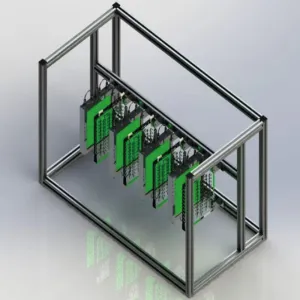
マイクロチャネル光化学反応器
彼らの分類: マイクロ流体光化学リアクタービュー: 832番号:解放時間: 2026-07-10 09:48:18マイクロチャネル光化学リアクターは、マイクロ反応技術と光化学を統合し、化学反応のための光エネルギーのより効率的、正確かつ安全な利用を可能にするプラットフォームとして機能します。従来のバッチ式タンクリアクターと比較して、光エネルギー利用、質量および熱伝達、反応速度、および操作の安全性において大幅な改善を達成し、現代のファインケミカルエンジニアリング、医薬品合成および新材料調製の中核機器となっています。
ニュース
カテゴリー:
検索結果はありません!
ケース
カテゴリー:
検索結果はありません!
ビデオ
カテゴリー:
検索結果はありません!
ダウンロード
カテゴリー:
検索結果はありません!
採用
カテゴリー:
検索結果はありません!



 ワッツアップ
 電話
電話