
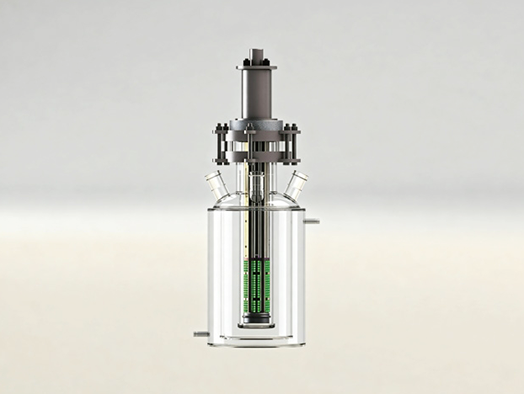
Continuous flow photochemical reactor technology has become one of the most important modern approaches in
light-driven chemical processing. By combining continuous flow processing with
photochemistry, this reactor technology enables efficient, scalable, and controllable
reactions that are difficult to achieve in traditional batch systems. For industries seeking better
productivity, safer operation, improved reaction selectivity, and more sustainable manufacturing,
continuous flow photochemical reactor technology advantages are highly significant.
This page provides an SEO-friendly, industry-focused overview of the technology, including definitions,
working principles, major advantages, typical specifications, common applications, and comparison tables.
The content is written for use in blog pages, category pages, industry landing pages, and HTML content blocks.
It contains only general industry information and does not include specific company recommendations.
Continuous flow photochemical reactor technology is a process system in which chemical reactions are driven by
light while the reactants move continuously through a reactor channel, tube, microchannel, or illuminated
flow path. Instead of holding a fixed volume in a single batch vessel, the reaction mixture is pumped through
a controlled light-irradiation zone. This allows the reaction to be exposed to a consistent photon flux,
precise temperature control, and optimized residence time.
In simple terms, a continuous flow photochemical reactor uses light as the energy source and
flow as the delivery method. This combination improves reaction repeatability and often increases
productivity compared with conventional batch photochemistry. The technology is widely used in fine chemicals,
pharmaceutical intermediates, specialty chemicals, material synthesis, and advanced research environments.
A continuous flow photochemical reactor typically includes a feed system, pumping unit, illumination source,
reaction channel, temperature control system, and collection outlet. Reactants are prepared in a suitable
solvent or reaction medium and then pumped through the illuminated section. The reactor may use LEDs,
UV lamps, visible light sources, or other specialized light systems depending on the chemistry.
During the process, photons initiate or accelerate chemical transformations such as photoinitiation,
photooxidation, photocatalysis, photoredox reactions, and selective bond formation. Because the material
moves in a controlled flow path, operators can manage exposure time, light intensity, mixing efficiency, and
thermal conditions with greater precision than in many batch systems.
The main reason this technology is gaining attention is that it solves several classic limitations of batch
photochemistry. Below are the key continuous flow photochemical reactor technology advantages that are most
relevant for industrial and laboratory-scale use.
In batch reactors, light often penetrates only the outer region of the liquid volume, which can create
uneven irradiation and reduced reaction efficiency. In a continuous flow photochemical reactor, the
reaction zone is usually thinner or more uniformly exposed, which improves photon utilization. This results
in more consistent reaction performance and often faster conversion rates.
Continuous flow operation offers precise control over residence time, temperature, flow rate, and light
intensity. These parameters directly influence product quality and yield. When the reaction environment is
stable and reproducible, the final output is usually more consistent from one production run to the next.
Photochemical reactions can involve energetic intermediates, reactive species, or unstable compounds.
Continuous flow systems reduce the amount of material held in the reactor at any given time, which lowers
the inventory of hazardous substances. This smaller reaction volume improves operational safety and is a major
advantage in industrial photochemistry.
Light-driven reactions may generate heat, especially under strong irradiation or when scaling up production.
Flow reactors provide a high surface-area-to-volume ratio, which helps dissipate heat quickly. Better thermal
control reduces unwanted side reactions, supports selectivity, and helps maintain stable operating conditions.
Because reactants receive more uniform irradiation and improved mixing, many photochemical processes proceed
more quickly in flow than in batch mode. Continuous processing also enables nonstop operation, which can
increase throughput and support long production campaigns. For manufacturers, this can translate into more
efficient use of time, labor, and equipment.
Scaling photochemical reactions in batch can be difficult because light distribution changes as vessel volume
increases. Continuous flow photochemical reactors often avoid this problem by scaling through longer run times
or by numbering up multiple reactor channels. This approach supports more predictable scale-up and reduces the
engineering uncertainty associated with large batch vessels.
Many photochemical reactions are highly sensitive to exposure time and light dosage. Continuous flow control
makes it easier to avoid overexposure or underexposure, both of which can create by-products. With optimized
irradiation and residence time, flow photochemistry can produce cleaner reaction profiles and improve
selectivity.
Continuous flow systems are well suited to automation, inline monitoring, and integration with downstream
purification or synthesis steps. This makes them attractive for modern process development and smart
manufacturing environments. Inline sensors can monitor temperature, pressure, flow rate, conversion, and other
variables in real time.
Optimized flow photochemistry can reduce excess solvent use, lower reaction time, and improve energy
efficiency, especially when using modern LED sources. Since the reactor volume is smaller and the process is
more controlled, waste generation may also be lower than in less efficient batch workflows.
Continuous flow photochemical reactor technology aligns well with sustainability goals. It supports safer
processing, lower waste, better energy use, and more efficient resource consumption. For organizations focused
on green chemistry and process intensification, this technology provides a compelling production pathway.
The following comparison highlights why continuous flow photochemical reactor technology is often preferred
for process optimization and scale-up.
| Aspect | Continuous Flow Photochemical Reactor | Traditional Batch Photochemical Reactor |
|---|---|---|
| Light Exposure | Uniform irradiation with improved photon utilization | Uneven light penetration in larger volumes |
| Reaction Control | Precise control of residence time, temperature, and flow rate | More variable control, especially at scale |
| Safety | Smaller reaction inventory reduces risk | Larger volumes may increase hazard exposure |
| Heat Management | Efficient heat dissipation and stable thermal control | Heat buildup can be more difficult to manage |
| Scalability | Scale by longer run time or numbering up | Scale-up can be limited by light penetration |
| Product Consistency | High repeatability and stable output | Greater batch-to-batch variation possible |
| Automation | Easy to integrate with inline monitoring and control | Automation is possible but often less efficient |
Continuous flow photochemical reactors are used across a wide range of industries and research fields. Their
flexibility makes them suitable for many light-driven transformations and product categories.
| Application Area | Typical Use Cases | Primary Benefit |
|---|---|---|
| Pharmaceutical Synthesis | Intermediate synthesis, photoredox transformations, API-related reactions | Improved control, safety, and repeatability |
| Fine Chemicals | Selective oxidation, functionalization, specialty molecule production | Higher selectivity and cleaner product profiles |
| Material Science | Polymer modification, photo-curing, surface treatment | Efficient irradiation and process uniformity |
| Agrochemicals | Intermediate manufacturing and advanced synthesis routes | Better process efficiency and reduced waste |
| Research and Development | Reaction screening, optimization, mechanism studies | Rapid testing and easy parameter adjustment |
| Specialty Manufacturing | Small-batch and high-value photo transformations | Flexible production and consistent quality |
Continuous flow photochemical reactor technology is not limited to one single design. Different configurations
are used depending on the application, scale, solvent system, light wavelength, and required residence time.
| Reactor Type | Basic Structure | Common Strength |
|---|---|---|
| Tubular Flow Reactor | Reaction mixture flows through illuminated tubing | Simple design and good surface-area-to-volume ratio |
| Microchannel Reactor | Very small channels for highly controlled flow | Excellent heat and mass transfer |
| Plate Reactor | Flat illuminated reaction space | Uniform exposure and compact footprint |
| Annular Reactor | Reaction flows around a central light source | Strong irradiation and flexible operating range |
| Coiled Reactor | Coiled tubing exposed to light | Simple scale-up and efficient light utilization |
To understand continuous flow photochemical reactor technology advantages, it is important to evaluate the
operating parameters that influence performance. These factors determine conversion efficiency, product
quality, and operational stability.
| Performance Factor | Why It Matters | Typical Effect on Process |
|---|---|---|
| Light Wavelength | Must match absorption or photocatalyst requirements | Improves reaction initiation and selectivity |
| Light Intensity | Controls photon dosage and reaction rate | Affects conversion speed and by-product formation |
| Residence Time | Determines how long reactants stay in the light zone | Influences yield, conversion, and overreaction risk |
| Flow Rate | Directly changes residence time and throughput | Impacts productivity and reaction completeness |
| Temperature | Controls stability and side reaction behavior | Improves reproducibility and selectivity |
| Mixing Efficiency | Ensures reactants and photons are distributed evenly | Supports faster and more uniform reactions |
| Reactor Geometry | Influences light penetration and mass transfer | Affects scalability and process performance |
The exact specifications of a continuous flow photochemical reactor vary according to design and application.
However, the following table summarizes common industry-oriented ranges and specification categories that are
often considered during system selection and process development.
| Specification Category | Typical Range or Description | Practical Importance |
|---|---|---|
| Light Source | LED, UV, visible light, or hybrid systems | Determines compatibility with target chemistry |
| Wavelength Range | Commonly UV to visible spectrum | Must align with photochemical absorption profile |
| Reactor Material | Glass, quartz, fluoropolymer, or specialized polymers | Affects transmission, durability, and solvent compatibility |
| Operating Mode | Continuous or semi-continuous flow | Supports stable long-run processing |
| Temperature Control | Ambient to controlled low or elevated temperatures | Maintains reaction stability and selectivity |
| Pressure Control | Atmospheric or pressurized operation depending on design | Enhances safety and process flexibility |
| Residence Time | Seconds to minutes, depending on chemistry | Critical for conversion and product quality |
| Scale | Laboratory, pilot, or production scale | Supports research and industrial implementation |
| Monitoring | Optional inline sensors, spectroscopy, or process analytics | Improves process control and data collection |
Industrial manufacturing increasingly demands high efficiency, lower risk, and better sustainability.
Continuous flow photochemical reactor technology addresses these requirements by enabling process intensification
and high-quality production in a compact footprint. The ability to control light exposure precisely makes
photochemical synthesis more practical for both development and manufacturing.
For many applications, this technology can reduce the gap between laboratory success and commercial production.
Traditional photochemical methods often struggle with scale-related limitations, especially when light
penetration and thermal control become difficult in larger vessels. Flow reactors solve many of these issues
by maintaining a consistent reaction environment throughout the process.
As a result, continuous flow photochemical reactor technology advantages include not only better performance
but also easier process transfer, stronger quality control, and more flexible production planning. These
benefits are especially valuable in industries where consistency, safety, and speed are essential.
The following keywords are naturally associated with this topic and may help support search visibility when
used in a relevant and high-quality page structure:
The main difference is that the reaction mixture moves through an illuminated system continuously rather than
remaining in one fixed batch vessel. This improves control, consistency, and irradiation efficiency.
Flow systems are often scaled by increasing operating time or adding more channels rather than enlarging one
vessel. This helps preserve light distribution and reaction performance.
In many cases, yes. Since the reactor holds a smaller amount of reactive material at one time, the process can
reduce exposure to hazardous intermediates and improve operational safety.
Common users include pharmaceutical manufacturing, fine chemicals, specialty chemicals, material science,
and research and development organizations.
Yes. They often support sustainability goals by reducing waste, improving energy efficiency, enabling safer
processing, and increasing resource utilization.
Continuous flow photochemical reactor technology advantages are clear across performance, safety, scalability,
and sustainability. By combining continuous processing with light-driven chemistry, these systems offer a
powerful platform for modern chemical manufacturing and research. They help improve reaction uniformity,
control heat more effectively, increase throughput, and support cleaner, more reliable production.
For organizations exploring advanced photochemical processing, a continuous flow photochemical reactor can be
an effective solution for achieving better results than many traditional batch approaches. With strong
compatibility for automation, process analytics, and scale-up, this technology continues to play an important
role in next-generation chemical production.
```
追加:江蘇省、上湖町、Lian Tang ave、Z Acer Z Hi工業団地7号館
電話番号:0512-65560736 / 0512-65371556
携帯:+86 13584913897 / +86 13771738377 (販売)
電子メール:jkzdhsm@yeah.net
この Web サイトでは、お客様に最高のエクスペリエンスを提供するために Cookie を使用しています。
 English
 Español
 Pусский
 Deutsch
 한국어
한국어 हिन्दी
 Indonesia
 Melayu
 Tiếng Việt



 ワッツアップ
 電話
電話
コメント
(0)