
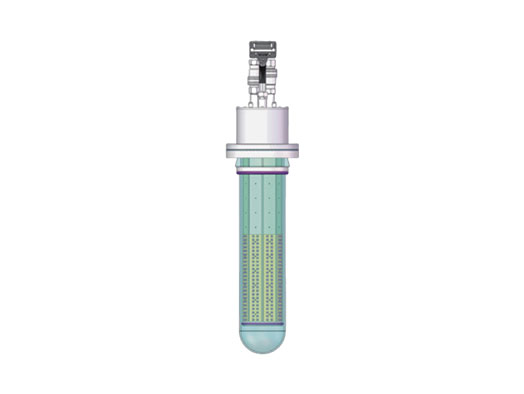
Continuous flow photochemical reactor design principles are central to modern light-driven processing in fine chemicals, pharmaceuticals, specialty chemicals, materials synthesis, and process development. As industries look for safer, more scalable, and more controllable ways to run photochemical reactions, the continuous flow photochemical reactor has become one of the most important reactor formats in advanced chemical engineering. This page provides an SEO-friendly, original, industry-wide overview of the topic, including definitions, key design principles, operational advantages, specification considerations, and practical tables for use in blogs, category pages, and industry pages.
Unlike batch photochemistry, where the entire reaction mixture is irradiated in a static vessel, continuous flow photochemical reactors move the reaction stream through a light-exposed zone in a controlled and continuous manner. This design improves light penetration, heat transfer, residence time control, process safety, and reproducibility. Because photochemical reactions are highly dependent on photon delivery, reactor geometry and optical path length play a critical role in determining conversion, selectivity, and scalability.
The following content focuses on general industry knowledge only. It does not include company recommendations or branded product promotions. Instead, it offers a practical, keyword-rich, and search-engine-friendly reference for engineers, researchers, procurement teams, technical buyers, and content editors who need reliable information about continuous flow photochemical reactor design principles.
A continuous flow photochemical reactor is a reactor system designed to carry out light-initiated or light-assisted chemical reactions while the reactants continuously flow through an illuminated reaction zone. The system typically includes a feed pump, tubing or a flow channel, a light source, a temperature-control mechanism, and a collection outlet. In many systems, the reactor may also include mixing elements, pressure control, inline monitoring, and quenching modules.
The main purpose of this reactor type is to maximize the interaction between photons and the reacting molecules. In photochemistry, reaction performance depends not only on concentration, temperature, and catalyst loading, but also on the ability of the reactor to deliver light uniformly across the process stream. Continuous flow designs help overcome the poor light penetration and scalability limitations that are common in conventional batch vessels.
In simple terms, a continuous flow photochemical reactor is designed to ensure that every portion of the reaction mixture receives consistent irradiation, controlled exposure time, and efficient heat removal. This is why reactor geometry, materials of construction, and optical properties are critical design considerations.
Continuous flow photochemistry has become increasingly important because it addresses many of the practical limitations of batch photochemical processing. In batch systems, only the outer layers of liquid may receive adequate light, while the inner layers can remain under-irradiated. This creates inconsistent reaction kinetics, lower reproducibility, and scale-up challenges. By contrast, flow systems improve photon utilization and allow engineers to tightly control residence time, irradiation intensity, and temperature.
From an industry perspective, continuous flow photochemical reactor design principles support:
These advantages make continuous flow photochemical reactors attractive for laboratory research, pilot-scale process development, and industrial manufacturing. For SEO and directory purposes, this topic is often searched using terms such as flow photoreactor design, photochemical reactor principles, continuous photochemical processing, and flow chemistry reactor design.
The design of a continuous flow photochemical reactor should be based on a careful balance of optical, hydraulic, thermal, and chemical factors. Because photons are the driving force of the reaction, design decisions must maximize light absorption while minimizing energy loss, overheating, channel fouling, and uneven residence time distribution.
Light penetration is one of the most important design considerations in photochemical reactor engineering. The reaction mixture must absorb light efficiently, but not so strongly that the light is consumed only near the reactor surface. Short optical path lengths are usually preferred because they improve uniform irradiation throughout the fluid volume.
In many continuous flow systems, thin tubing, microchannels, flat plates, or annular geometries are used to reduce the distance that light must travel through the medium. This increases the effective photon flux available to the reacting molecules and reduces the risk of dark zones.
Residence time is the amount of time the reaction mixture spends in the illuminated zone. In photochemistry, residence time strongly affects conversion, selectivity, and product distribution. Continuous flow reactors allow precise residence time control through pump flow rate and reactor volume.
A good design should provide a narrow residence time distribution, meaning that all fluid elements experience similar exposure time. This is especially important for reactions that are sensitive to over-irradiation or product degradation.
Photochemical reactions often generate heat, especially when using high-intensity LEDs, lasers, or mercury lamps. Efficient temperature control is essential to avoid side reactions, catalyst decomposition, solvent evaporation, and pressure buildup. A well-designed reactor includes cooling jackets, heat sinks, controlled ambient conditions, or high-surface-area channel materials that remove heat effectively.
Thermal control also supports safe and stable operation during long continuous runs. In many cases, the ability to maintain a constant temperature is one of the major advantages of flow photochemistry over batch operation.
Photochemical reactions often involve dissolved gases such as oxygen, hydrogen, or other reactive species. In these cases, mass transfer becomes crucial. Good reactor design ensures efficient mixing between liquid and gas phases and reduces concentration gradients within the stream.
Microstructured channels, serpentine paths, static mixers, and segmented flow can improve mass transfer and reaction efficiency. Proper mixing is especially important for heterogeneous photochemical processes involving catalysts, suspensions, or solid particles.
Materials of construction must transmit or reflect light appropriately, resist chemical corrosion, and tolerate the operating temperature and pressure. Common materials include quartz, borosilicate glass, fluoropolymers, stainless steel with optical windows, and chemically resistant engineered plastics.
The ideal material depends on the wavelength of light used, solvent compatibility, pressure requirements, and cleaning strategy. For UV photochemistry, quartz is often preferred because of its excellent UV transmission. For visible-light processes, a broader range of transparent polymers and glasses may be suitable.
No single reactor geometry is optimal for every photochemical application. Reactor shape, channel diameter, surface area-to-volume ratio, and illumination strategy must be selected based on the target reaction. Small-scale screening may favor compact coil reactors, while scale-up applications may require plate reactors, annular reactors, or modular numbering-up systems.
The best design is often the one that balances photon efficiency, process flexibility, fouling resistance, and maintainability.
A continuous flow photochemical reactor typically includes several integrated functional elements. Each element contributes to the overall performance of the system.
| Component | Function | Design Considerations |
|---|---|---|
| Feed pump | Delivers reactants at a controlled flow rate | Must provide stable flow, chemical resistance, and accurate dosing |
| Reactor channel or tube | Holds the flowing reaction mixture in the light zone | Should provide short optical path length and low pressure drop |
| Light source | Supplies the photons required to initiate or accelerate the reaction | Must match absorption wavelength, intensity, and heat load |
| Cooling system | Removes heat from the reaction zone | Maintains stable temperature and prevents overheating |
| Mixing element | Improves contact between reactants, catalysts, or gases | Should minimize dead zones and pressure loss |
| Pressure regulation | Supports safe operation under controlled pressure | Important for volatile solvents and gas-phase reactions |
| Inline analyzer | Monitors conversion or product quality in real time | Useful for process control, optimization, and validation |
| Collection or quench unit | Stops the reaction and collects product stream | Should prevent further reaction or degradation after irradiation |
Geometry is one of the strongest determinants of performance in continuous flow photochemical reactor design. Different configurations are used to improve photon distribution, mass transfer, and scale flexibility.
| Reactor Geometry | Main Advantage | Typical Use |
|---|---|---|
| Coil reactor | Simple design, high surface area-to-volume ratio | Lab-scale screening and moderate-scale reactions |
| Flat plate reactor | Excellent light exposure and short optical path | Visible-light and UV photochemistry |
| Annular reactor | Uniform irradiation around a central light source | Processes requiring consistent radial illumination |
| Microchannel reactor | Very high control over residence time and mixing | High-value synthesis and process development |
| Tube-in-tube reactor | Good for gas-liquid photochemical reactions | Oxygenation, gas dosing, and multiphase reactions |
| Numbered-up modular reactor | Facilitates scale-up by parallelization | Pilot and production-scale continuous flow operation |
In practical use, the geometry must be chosen based on light absorption properties, target throughput, solvent behavior, catalyst system, and cleaning requirements. For example, highly absorbing mixtures often require very thin channels, while lower-absorbing systems may tolerate larger flow paths.
The light source is a central design element in every continuous flow photochemical reactor. The wavelength, intensity, stability, and thermal output of the light source directly influence reaction speed and selectivity. Common industrial and laboratory light sources include LEDs, mercury lamps, xenon lamps, and laser-based systems.
LED technology has become especially important in modern flow photochemistry because it offers narrow wavelength output, low heat generation, long service life, and energy efficiency. UV-LEDs and visible LEDs can be matched to the absorption profile of many photochemical substrates and catalysts.
| Light Source Type | Strengths | Limitations |
|---|---|---|
| LED | Energy-efficient, narrow wavelength, low heat, long life | May require multiple units for high intensity or broad coverage |
| Mercury lamp | Strong UV output, established use in photochemistry | Higher heat, broader emission, lower energy efficiency |
| Xenon lamp | Broad spectrum, useful for varied reactions | Thermal management and spectral filtering may be needed |
| Laser | Very high intensity and precise wavelength control | Higher cost and narrower application scope |
When selecting a light source, engineers should consider overlap between emission spectrum and substrate absorption, irradiation uniformity, power density, cooling demand, and operating cost. The best choice is usually the one that delivers the necessary photon flux with the least thermal and operational burden.
Continuous flow photochemical reactor design principles are best understood through measurable performance parameters. These parameters help compare reactor options and optimize process conditions.
| Parameter | Description | Why It Matters |
|---|---|---|
| Photon flux | Amount of light delivered per unit time | Determines reaction initiation and overall efficiency |
| Optical path length | Distance light travels through the reaction medium | Affects penetration and uniformity of irradiation |
| Residence time | Time reactants stay in the illuminated zone | Controls conversion and product selectivity |
| Conversion | Fraction of reactant transformed into product | Indicates reaction success |
| Selectivity | Preference for desired product over side products | Critical for yield and purification efficiency |
| Temperature stability | Ability to maintain consistent operating temperature | Prevents side reactions and runaway behavior |
| Pressure drop | Resistance to flow through the reactor | Impacts pumping requirements and scalability |
| Space-time yield | Product output per reactor volume per time | Important for productivity benchmarking |
The advantages of continuous flow photochemical reactors are closely linked to their design principles. A well-engineered system can outperform batch photochemistry in many applications.
Because flow reactors are often built with small channel dimensions and large surface area-to-volume ratios, more of the reaction mixture receives useful irradiation. This helps reduce the waste of photons and improves energy efficiency.
Photochemical reactions may involve unstable intermediates, oxygen-sensitive compounds, toxic species, or exothermic transformations. Continuous flow systems reduce the amount of reacting material in the reactor at any moment, which lowers risk and improves containment.
Continuous operation improves consistency by controlling residence time, temperature, and light exposure more precisely than batch systems. This is valuable for both research reproducibility and industrial quality assurance.
Instead of simply increasing vessel size, continuous flow systems can often be scaled by extending run time, increasing throughput, or numbering up multiple channels. This provides a more controlled path to production scale.
Short, controlled exposure to light can reduce over-irradiation and limit decomposition pathways. This is especially beneficial for sensitive intermediates or highly selective transformations.
Flow photochemistry lends itself naturally to inline control, automated pumping, process analytics, and digital monitoring. These features support modern process intensification strategies.
Although the benefits are significant, continuous flow photochemical reactor design also involves several engineering challenges. Successful design requires trade-offs between performance, cost, and maintainability.
For these reasons, photochemical reactor engineers often test multiple configurations during development. Optimization usually involves balancing optical access, channel size, residence time, and solvent compatibility.
When evaluating a continuous flow photochemical reactor, technical users often examine a set of basic specifications. The exact values will vary by application, but the following table shows common specification categories used in industry discussions and product comparisons.
| Specification Category | Typical Consideration | Design Impact |
|---|---|---|
| Wavelength range | UV, visible, or broadband compatibility | Must match target photochemistry |
| Light power output | Intensity delivered to the reaction zone | Influences reaction rate and throughput |
| Channel volume | Internal volume of the illuminated reactor path | Determines residence time and batch equivalent scale |
| Flow rate range | Minimum and maximum pumpable throughput | Defines flexibility for process development |
| Operating temperature | Allowed thermal range | Critical for reaction control and safety |
| Operating pressure | Maximum safe system pressure | Relevant for volatile solvents and gas handling |
| Material compatibility | Resistance to solvents, acids, bases, and UV | Affects durability and maintenance |
| Footprint | Physical size of the equipment setup | Important for lab and production space planning |
Continuous flow photochemical reactor design principles are used across a wide range of chemical and materials applications. The following are common categories where photochemical flow systems are widely relevant:
In many of these applications, continuous flow improves selectivity, enables safer processing, and shortens development timelines. The reactor design must still be adapted to the light sensitivity and reaction kinetics of each specific transformation.
To achieve reliable performance in continuous flow photochemistry, several best practices are commonly recommended:
These principles help improve throughput, reliability, and process robustness. They are equally relevant for academic laboratories, pilot plants, and industrial manufacturing environments.
| Aspect | Batch Photochemistry | Continuous Flow Photochemistry |
|---|---|---|
| Light penetration | Often limited in larger vessels | Typically much better due to thin channels |
| Temperature control | Can be uneven in larger volumes | Usually more efficient and stable |
| Residence time control | Less precise | Highly precise and adjustable |
| Safety | Larger reaction inventory may increase risk | Smaller hold-up volume improves safety |
| Scale-up | Often difficult due to photon transfer limits | More predictable through scaling strategies |
| Reproducibility | Can vary with vessel geometry and mixing | More consistent under steady-state operation |
| Automation | Less naturally integrated | Highly compatible with automation and inline control |
For content planning and on-page SEO, the following keyword themes are commonly associated with this topic:
Using these terms naturally in headings, tables, intro paragraphs, and comparison sections can improve topical relevance for search engines. However, keyword use should remain readable, informative, and user-focused rather than repetitive or unnatural.
Continuous flow photochemical reactor design principles center on maximizing light delivery, controlling residence time, managing heat, and selecting geometries and materials that support safe, efficient, and reproducible photochemical reactions. Compared with batch processing, continuous flow photochemistry offers superior control over irradiation, stronger process safety, easier automation, and more scalable operation in many applications.
For industrial content, catalog pages, and technical blogs, this topic is highly valuable because it connects chemical engineering, reactor design, photochemistry, process intensification, and scale-up strategy. Whether the goal is laboratory optimization or production planning, a well-designed continuous flow photochemical reactor can significantly improve performance and reliability.
As photochemical manufacturing continues to grow, demand for efficient reactor configurations, optimized light source selection, and process-safe continuous operation will remain strong. That makes this subject an important reference point for any industry page focused on advanced reaction engineering, flow chemistry, and photochemical processing.
追加:江蘇省、上湖町、Lian Tang ave、Z Acer Z Hi工業団地7号館
電話番号:0512-65560736 / 0512-65371556
携帯:+86 13584913897 / +86 13771738377 (販売)
電子メール:jkzdhsm@yeah.net
この Web サイトでは、お客様に最高のエクスペリエンスを提供するために Cookie を使用しています。
 English
 Español
 Pусский
 Deutsch
 한국어
한국어 हिन्दी
 Indonesia
 Melayu
 Tiếng Việt



 ワッツアップ
 電話
電話
コメント
(0)